
You cannot fail an eye exam, and you cannot fake your way into a worse prescription by guessing badly. But you can skew the result by testing on a bad day, by straining to read letters, or by answering quickly when the two options honestly look the same.
Can wrong answers give me the wrong prescription?
People ask me this at the counter more than you would think, usually in a slightly embarrassed way. They are worried that they answered “one or two” wrongly and that everything downstream is now built on their mistake.
The reassuring part first: the test is built to absorb that. Comparisons are repeated, checked in different orders and cross checked against an objective measurement taken by machine before you ever answer a question. One wrong answer does not become your prescription.
What genuinely skews the result?
- Straining to read the smallest line. Squinting and forcing gives a better chart result than your comfortable vision, which can push the prescription in the wrong direction. Read what you can read. Guessing is allowed, forcing is not helpful.
- Coming in with your focusing system tense, for example straight from several hours of screen work. Your eyes may not fully relax during the test.
- Dry eyes on the day. If your eyes are dry that day, every comparison shifts, and the answers wander. Say so if your eyes have been gritty or burning.
- Answering to be agreeable. If two options look identical, the correct answer is “they look the same.” That is a genuine data point and it stops the test from drifting.
- Contact lenses worn right up to the appointment, which can temporarily change the cornea. Ask the practice how long before the exam you should take them out.
A natural way to look after your eyes
Dry, tired eyes are the part an exam cannot fix
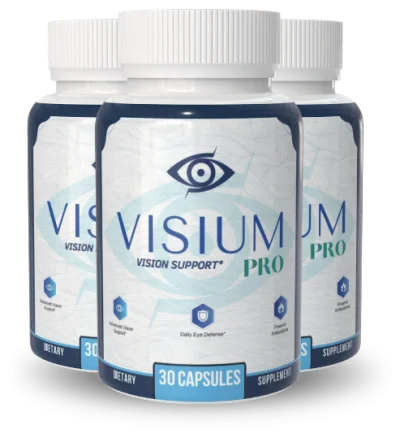
Straining, long screen hours and a dry surface are what skew an exam on the day, and they are also the side of your eyes a steady daily routine can support between appointments. The daily support I point people to is Visium Pro.
- One capsule a day, a one-time order with no subscription
- Lutein, zeaxanthin and bilberry, the eye nutrients I look for first
- Made in Aurora, Colorado, from $49 a bottle
- 60-day money-back guarantee, and you keep the bottles
See What I Found on the Visium Pro Label
Visium Pro makes no floater claim and does not dissolve them. These statements have not been evaluated by the FDA; it is a dietary supplement, not intended to diagnose, treat, cure or prevent any disease.
How do I prepare so the prescription matches my life?
- Book a time of day when your eyes are at their most typical, not at their most exhausted.
- Bring your current glasses, including the old pair you kept in a drawer. They are data.
- Write down your actual complaint in one specific sentence before you go in, because the room is a bad place to compose it.
- Say which tasks matter. A prescription optimised for a computer at seventy centimetres is not the same as one optimised for a dashboard at night.
- If your eyes are dry that week, say it at the start rather than at the end.
What if it still comes out wrong?
A recheck is a normal request. Go back, bring the glasses and describe the failure specifically. Can an eye exam be wrong covers what happens next and in what order, and what a normal eye exam actually measures explains which extra tests to ask for when your symptom was never on the list.
What if I genuinely cannot tell which is better?
Say exactly that. “They look the same” is a real answer and a useful one.
When two options genuinely look identical, it usually means the difference between them is smaller than what your eye can distinguish, which tells the examiner they have arrived at the right place. Guessing to seem helpful is what introduces error, because a guess gets treated as a preference.
The same goes for the chart. Guessing at letters you cannot quite make out is expected and encouraged. Squinting and straining to force them into focus is not, because it produces a result that does not match how you see in real life.
Does being tired or ill change the result?
It can. A tired focusing system does not relax fully, dry eyes make every comparison wobble, and a heavy cold with blocked sinuses makes most people miserable at reading anything.
None of that ruins an exam, and none of it is a reason to cancel unless you are unwell. It is a reason to say it out loud at the start, so it can be taken into account rather than discovered afterwards through a pair of glasses that does not work.
How long before the exam should I take my contacts out?
Ask the practice, because it depends on the lens type. Soft lenses usually need a few hours to a day, and rigid lenses considerably longer, sometimes a week or more.
The reason is that contact lenses can temporarily reshape the front surface of the eye. Measure too soon and the prescription reflects the lens rather than the eye, and the glasses made from it feel wrong for reasons nobody can find later.
Can I fake needing glasses, or fake not needing them?
People ask this for two reasons: worry about a driving standard, or a child who wants glasses because their friends have them.
Both are more difficult than they look. The subjective answers are cross checked against an objective machine measurement and against the health examination, so a pattern that does not hang together stands out.
The more useful point is what faking costs. Under reporting what you can see to keep a licence risks you and everyone else on the road. Over reporting gets you a prescription you do not need, which is a headache you paid for.
- A sudden shower of new floaters, especially with flashes
- A curtain, veil or shadow moving across part of your vision
- Any sudden loss of vision, in one eye or both
- Flashes of light that keep going and do not settle
- Severe eye pain with halos around lights, headache or vomiting
Those can mean a retinal tear, a retinal detachment or acute glaucoma. Seek care the same day.
Questions people ask me
Can I accidentally get a stronger prescription by guessing?
It is very unlikely. Comparisons are repeated and checked against an objective machine measurement, so an isolated wrong answer gets caught. What does shift the result is systematically straining to read lines you cannot comfortably see.
Should I squint to read the smallest line?
No. Squinting narrows the opening you see through and artificially sharpens things, which makes the measurement less like your real vision. Read what you can read, guess when you are unsure, and say when you cannot.
Does being tired affect an eye exam?
It can. Tired eyes do not relax fully during testing, and dry eyes on a tired day make the comparisons unreliable. If the appointment is at the end of a heavy screen day, mention it.
What if both options look the same during the test?
Say so. It is a real answer and usually means the difference is smaller than your eye can distinguish, which tells the examiner they have arrived at the right place. Guessing to be helpful is what introduces error.
Should I take my contact lenses out before an eye exam?
Yes, and ask the practice how long beforehand, because it depends on the lens. Soft lenses usually need a few hours to a day and rigid lenses considerably longer. Lenses can temporarily reshape the front of the eye and skew the measurement.
Can I fake needing glasses?
It is harder than it looks, because the subjective answers are cross checked against a machine measurement and the health examination. The more useful question is what faking costs: a prescription you do not need is a headache you paid for.